
Comfort while walking with Orthotics or Insoles
- Custom inserts play a significant role in enhancing your overall comfort.
2. Incorporating custom inserts into your daily routine can lead to improved foot health.
3. Utilizing custom inserts can significantly improve the fit of your footwear.
4. Choosing the right custom inserts is essential for proper foot support.
5. Custom inserts ensure that every shoe you own fits comfortably.
This post focuses on keeping our feet comfortable while wearing various types of footwear. We prioritize comfort without sacrificing style. Sharp & Splivie aims to help you find that balance. Drawing on 28 years of experience, I will share insights that could transform how you wear your shoes.
In my previous blog, I discussed Tongue Pads and their role in improving shoe fit. This post will explore how to achieve an even better fit.
Incorporating supportive devices into your footwear can significantly enhance comfort and support.
Don’t believe me? Stay with me now, and watch this…
Incorporating custom inserts into your daily routine can provide even greater benefits for your foot health and comfort.
In particular, using custom devices can help align your feet properly, providing enhanced support.
Additionally, custom devices can provide the necessary support for various foot-related issues.
Additionally, utilizing custom devices can greatly enhance the overall support and comfort of your feet.
Using custom inserts can also provide relief for various foot conditions, making them a worthwhile investment.
Many users find that using custom devices alleviates foot pain associated with various conditions.
Using custom devices can greatly optimize your comfort and support while walking.
Incorporating custom inserts can enhance comfort and support in your footwear choices.
Let’s get knowledgeable. Humans are born with around 270 bones but end up with 206 as they grow. Each foot contains 26 bones, totaling 52 bones in our feet. That’s over a quarter of the bones in our body! We also have over 200,000 nerve endings and a substance known as ‘fat pads’ supporting our feet.
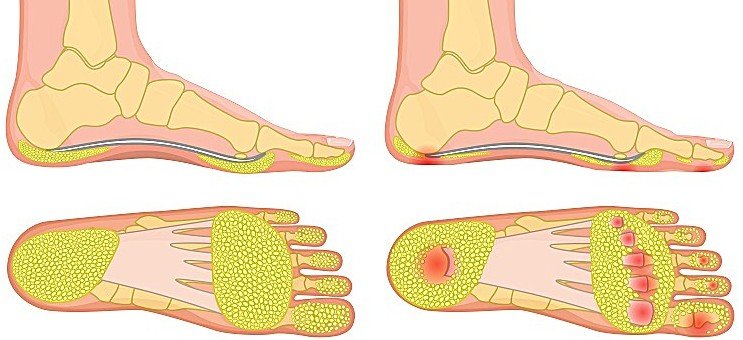
Fig. A. Fat pad placement under the foot
At birth, humans have around 270 bones, but as we grow, this number decreases to 206 due to the fusion of several bones. Each foot contains 26 bones, leading to a total of 52 bones in both feet—more than a quarter of the bones in the human body! Additionally, we possess over 200,000 nerve endings and a substance called ‘fat pads’ underneath our feet.
Key Facts About Our Feet
We are born with around 270 bones, but that number reduces to 206 as we grow. Many bones fuse together during this process. Each foot contains 26 bones, totaling 52 in both feet, which is over a quarter of all the bones in our body! In addition, we have more than 200,000 nerve endings and a substance known as ‘fat pads’ supporting our feet.
Understanding Foot Anatomy
Fat Pads are thick layers of connective and adipose tissue situated between the skin and the heel and ball of the foot. As men age, particularly in our mid-40s, walking on hard surfaces may become uncomfortable. Orthotics can provide essential support.
While it’s hard to predict who will experience fat pad loss, it’s a common issue as we grow older. This site caters to the ‘mature man’—those roughly in their mid-40s and beyond.
If you face this issue, this information is for you.
But first, let’s address some questions about your feet. Do your feet feel so flat that when you walk barefoot, it sounds like a duck? Are your arches so high that you can’t tell which is more uncomfortable: the bottom or the top of your foot? If any of these apply to you, this information is for you!
And now, for the moment you’ve all been waiting for, I, Sharp & Splivie, would like to welcome you to the wonderful world of….
Understanding the advantages of orthotics is crucial for making informed choices about your foot care.
Understanding the Benefits of Orthotics vs Insoles
Yes, insoles and orthotics can change your life overnight. That’s right. I said it. OVERNIGHT! But what’s the difference between these items called insoles and orthotics? Let’s explore this.
The Benefits of Insoles
Orthotics provide targeted support that can help with serious foot issues.
The difference between orthotics and insoles comes down to their purpose and level of support:
Orthotics are specifically designed to address many foot discomforts.
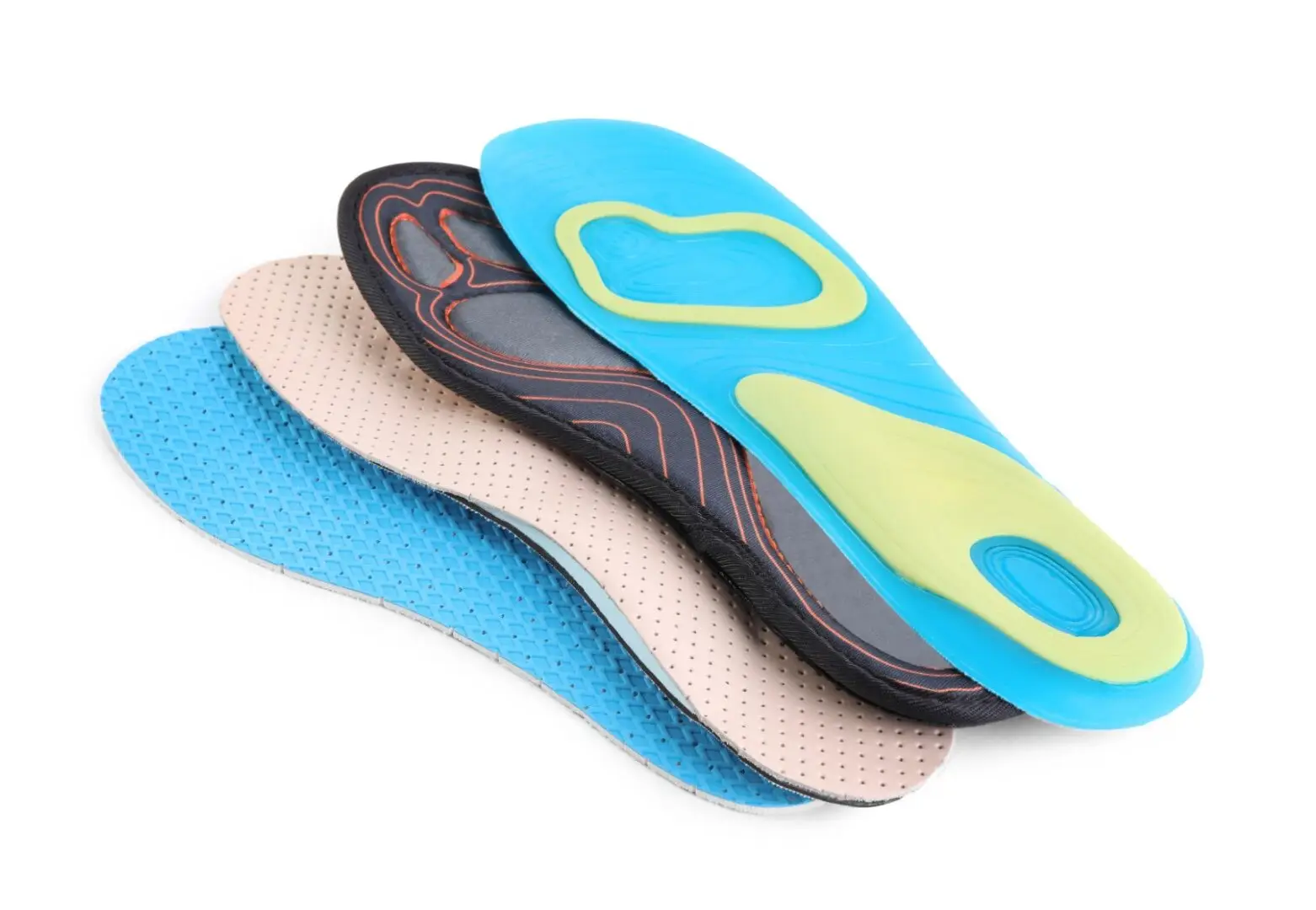
- Insoles are general-purpose inserts designed to provide a level of minimal comfort and cushioning. They are often made of foam, gel, or memory foam and can be purchased over the counter. Insoles help with minor foot discomfort and improve shoe fitness but do not correct serious foot issues. They may look like any one of these items in Fig. B.
How to use insoles
Orthotics provide essential support that can alleviate pain caused by common foot conditions.
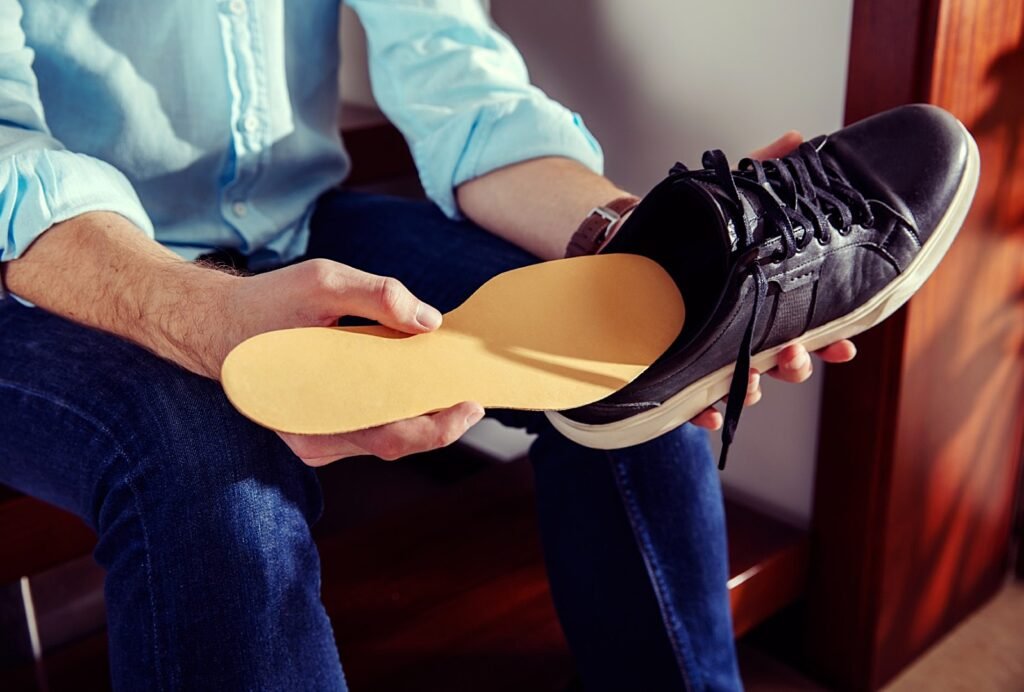
Now, if you’re looking for better comfort and cushioning in your footwear, insoles may be what you need. Insoles are usually flat, and some may have a little arch support. If you’re using them in shoes that have already been worn, remember the leather upper has likely stretched out. You can insert them directly into the shoe on top of what’s already inside. This method not only brings cushion comfort to the bottom of the feet but may also improve the overall fit of the shoe. If the shoe hasn’t stretched much, remove the original insole and replace it with your over-the-counter purchased insole. See Fig. C.
Many people find that investing in orthotics can lead to long-term comfort and support.
Choosing orthotics tailored to your foot type can enhance comfort significantly.
Custom orthotics help alleviate pain and improve foot health effectively.
Custom devices are a vital part of managing foot abnormalities.
Custom orthotics are specifically designed for your unique foot shape and can drastically improve comfort.
How to use orthotics
Using orthotics correctly is essential for maximum benefit and comfort.
Orthotics can be life-changing for those suffering from chronic foot pain.
Choosing the right custom inserts is vital for ensuring proper alignment and support for your feet. Custom inserts can often alleviate pain associated with foot conditions.
Custom inserts can often alleviate pain associated with foot conditions.
Custom inserts are medical-grade or sometimes custom-made inserts designed to correct foot abnormalities and provide targeted support. They are sometimes prescribed by a podiatrist, but with proper knowledge, you may be able to purchase quality custom inserts over the counter or online. Custom inserts help with conditions like plantar fasciitis, flat feet, and overpronation, but not always. They are typically rigid or semi-rigid, offering biomechanical correction rather than just cushioning.
Wearing custom inserts correctly can lead to significant improvements in comfort.
Investing in quality orthotics can lead to a significant improvement in your foot health.
Primarily, to wear a custom insert in a shoe properly, you need to remove the original insole from the shoe and replace it with the custom insert. Custom inserts will be thicker and more substantial than insoles. There are exceptions to this rule and those exceptions are insoles that are made for dress shoes. Dress shoe custom inserts are usually thinner than full length and a good pair like Aetrex and Pedaq will be cut from the heel to just below the ball of the foot, making the dress shoe supportive where you need it. See Fig. F.
Choosing the right orthotic can provide the support your feet need.
Now, some of you may have attempted to use dress orthotics and said, ‘I can’t use them because they keep moving in the shoe.’ Let me solve your problem.
If your dress orthotic or half orthotic keeps slipping in your shoe, do this:
Go to your nearest drugstore and buy a pack of small Velcro Tabs. Take one tab, put it under the heel portion of the orthotic. Press the other side down on the heel portion of the shoe where you sit the orthotic. Voila!
Understanding your needs for orthotics is the first step towards relief.
No more slipping – and the good thing about this is that remember it’s Velcro, so you can take it up and out the shoe and use it in your other dress shoes the same way. Velcro. Who knew.
What type of orthotic do I need?
Ok, hear me out. I am not a doctor, and nor do I play one on TV. But I can tell you that I have close to 30 years of insole, orthotic and shoe fitting so trust me, I can stand ten toes down on the facts that I am bestowing upon you, the public. With that being said, let’s get knowledgeable. First, if you are having serious foot or feet abnormalities to where you need to see a Podiatrist or have surgery, please do so. For all others, this is for you.
This is not the exception, but most people, whether you have skinny, wide or fat feet, will fall in the category of having high arches, normal to low arches or flat feet. See Fig. H.
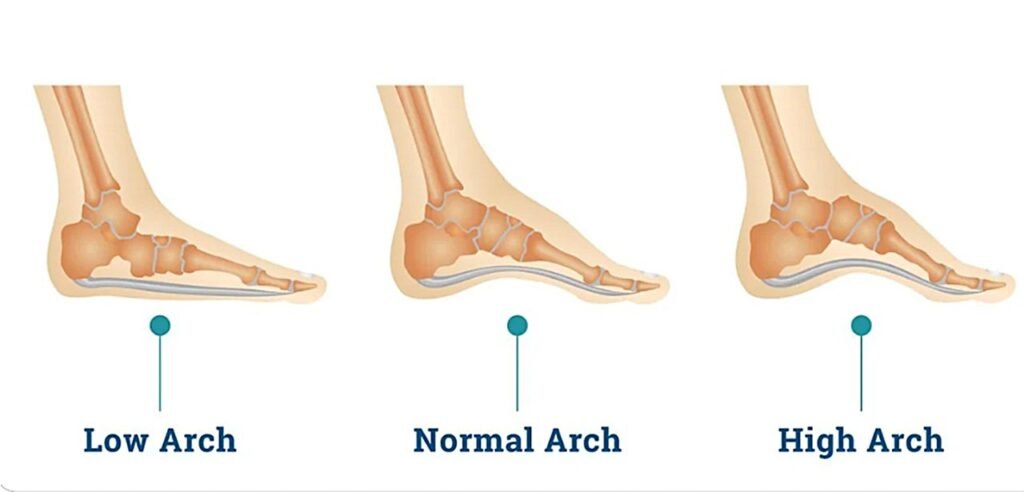
With high arches, the arch may be pronounced, requiring support for the heel and arch, as well as Metatarsal Support. In contrast, medium to low arches may require more aggressive support. For flat feet, orthotics need to shift the ankle and arch area to achieve comfort and support.
How do I find out what size I need?
Good question. Well, remember in my blog about Tongue Pads, I showed how you basically get your shoe size with a Brannick Device. When it comes to insoles and orthotics, all you really have to do is remember the arch lengths of your feet. Now lets’ zero in……..
With insoles, the packages will usually say ‘Size 8-9’, or ’10-11’. So, if you wear a size 9 and a half, overall, you get the 8-9 insoles. Insoles are cut to cater to the wider spectrum of measurement.
With orthotics, the measurement needs to be as accurate as possible from the heel to the ball of the foot measurement. For example, a customer needing orthotics has high arches and experiences pain due to too much space underfoot when standing or walking. His heel-to-toe shoe size is 11, but his arch length measures 12. He should get size 12 orthotics with metatarsal pads and cut the orthotic down at the front of the toe area to fit in the shoe, if need be.
3. Steppers insoles for Men and Women
Incorporating orthotics can enhance your foot health and comfort substantially.
4.Valsole Heavy-Duty (220 lbs +) Pain Relief Orthotics for Men
Investing in quality orthotics may be the best decision for your foot health.
In conclusion, achieving a good shoe fit and improving foot placement in your footwear can make a significant difference. Remember, at Sharp & Splivie, my motto is:
When you know better, you dress better.
For those with chronic discomfort, high-quality orthotics can transform your daily comfort.
So, if you’re looking for basic comfort, insoles might be enough. But if you have chronic foot pain or structural issues, custom inserts may just be the better choice.
Always consider orthotics when looking to enhance your footwear experience.
In conclusion, as stated in my first blog, when it comes to achieving a good shoe fit and improving foot placement in your footwear, Tongue Pads are the solution you need. When it comes to cushion and comfort, insoles might be better for you. If you have High arches, low arches, or flat feet, orthotics are where you say goodbye to discomfort and hello to a perfect fit. Explore our range of insole and orthotic options by clicking here and experience the difference for yourself. Remember, at Sharp & Splivie, my motto is;
When you know better, you dress better.
Incorporating custom inserts into your routine can make a significant difference in your overall foot health.
It’s important to note that if you’re dealing with chronic foot pain or structural issues, see a podiatrist for custom inserts. They may be the better choice for you.
[…] Insoles & Orthotics […]
[…] Insoles & Orthotics […]
[…] Insoles & Orthotics […]
[…] Insoles & Orthotics […]
[…] Orthotics and Insoles […]